The pages that sell your software are the ones you have to write yourself
In almost every software category the highest-converting organic pages are comparisons, alternatives and integration pages. They are also the pages that require you to have genuinely used the other product, which is the one thing no content tool can do for you. This page is about which half of SaaS content to automate and which half not to.
Why SaaS content volume rarely turns into signups
The standard play is to publish top-of-funnel articles on the broad topic your product sits in, on the theory that traffic becomes pipeline. For most categories it does not, or not at a rate that justifies the output. Someone reading a general explainer about a discipline is a long way from buying software for it, and that distance shows up as a conversion rate close to nothing.
The searches that carry buying intent are narrow and specific. The name of a competitor followed by the word alternative. One product against another. Best tools for a precisely described job. How your product connects to the thing they already use. Pricing questions. Migration questions. These have lower volume and dramatically higher intent, and in most categories they are contested by a handful of pages, many of them affiliate roundups written by people who have used none of the products.
The second problem is self-inflicted. A documentation site and a marketing site often target the same phrases, with the docs page winning the ranking and converting nobody, because a reference page is the wrong destination for a prospective buyer.
What Visorank does, and where it stops
It is good at the layer underneath the money pages: the use-case, how-to and problem-definition content that is real work, has real volume, and nobody has time for. On comparison pages it will produce a draft, and the section below says plainly why that draft needs more from you than any other page on your site.
- Finds the specific jobs, not the broad topic
- Expands your terms with Google's autocomplete, related searches and People Also Ask, which surfaces the long tail of use-case and integration phrasings that your own team would not think to write down.
- Writes the use-case layer at volume
- The how-to-do-a-specific-thing pages, the problem explainers, the workflow guides. This is where most SaaS content debt sits and where generation genuinely helps.
- Answers first, which matters more here than anywhere
- Software buyers increasingly ask an assistant before they search. A page that states its answer in the opening paragraph with specifics attached is the page that gets quoted; a page that opens with three paragraphs of context is not.
- Publishes to wherever your marketing site lives
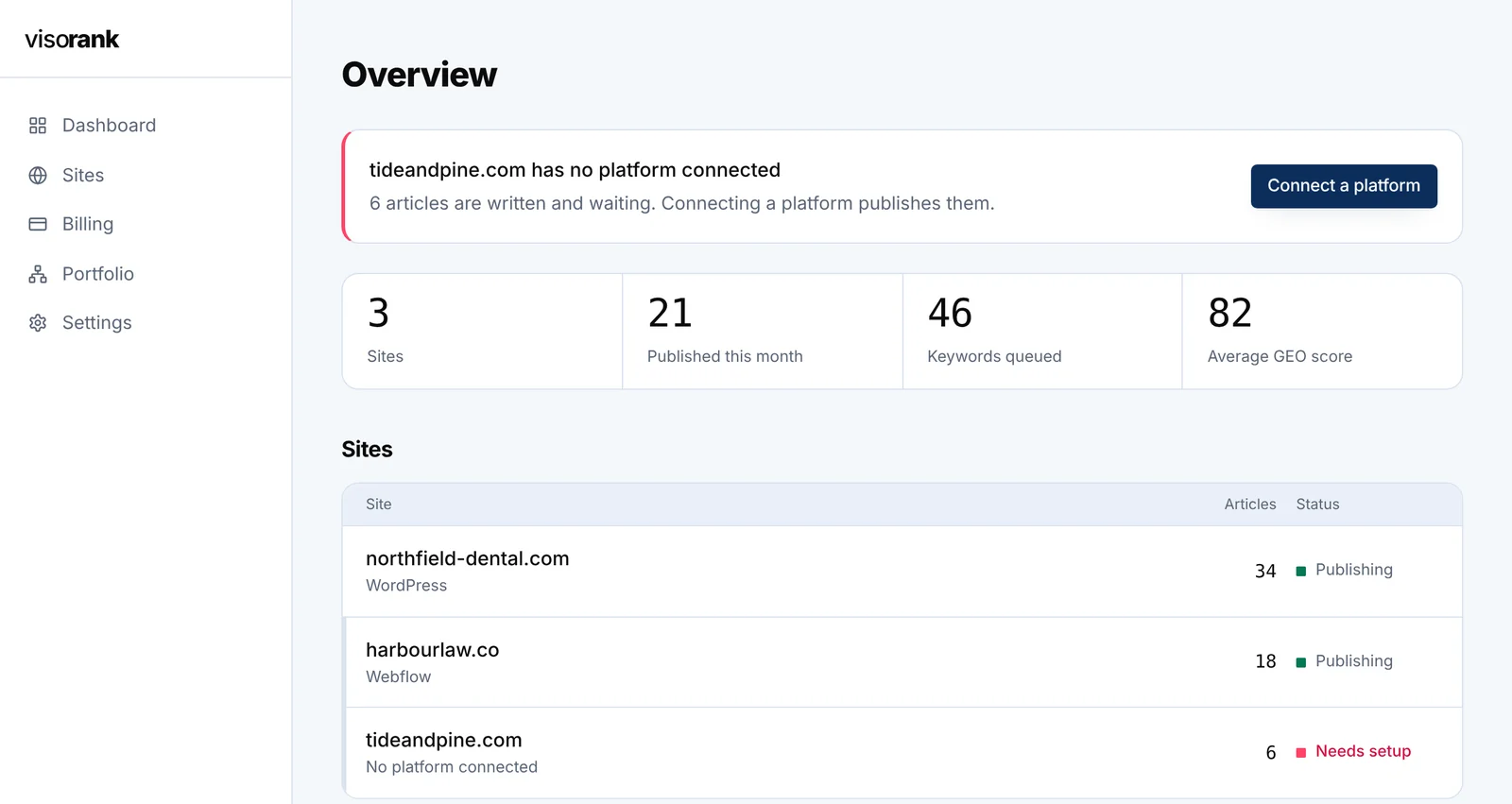
- WordPress, Ghost, Webflow, Shopify or an endpoint of your own, which is what most custom marketing sites need.
- Finds where docs and marketing collide
- The audit crawls the site and reports duplicate and competing content, which on a SaaS site is usually the documentation outranking the page that was meant to convert.
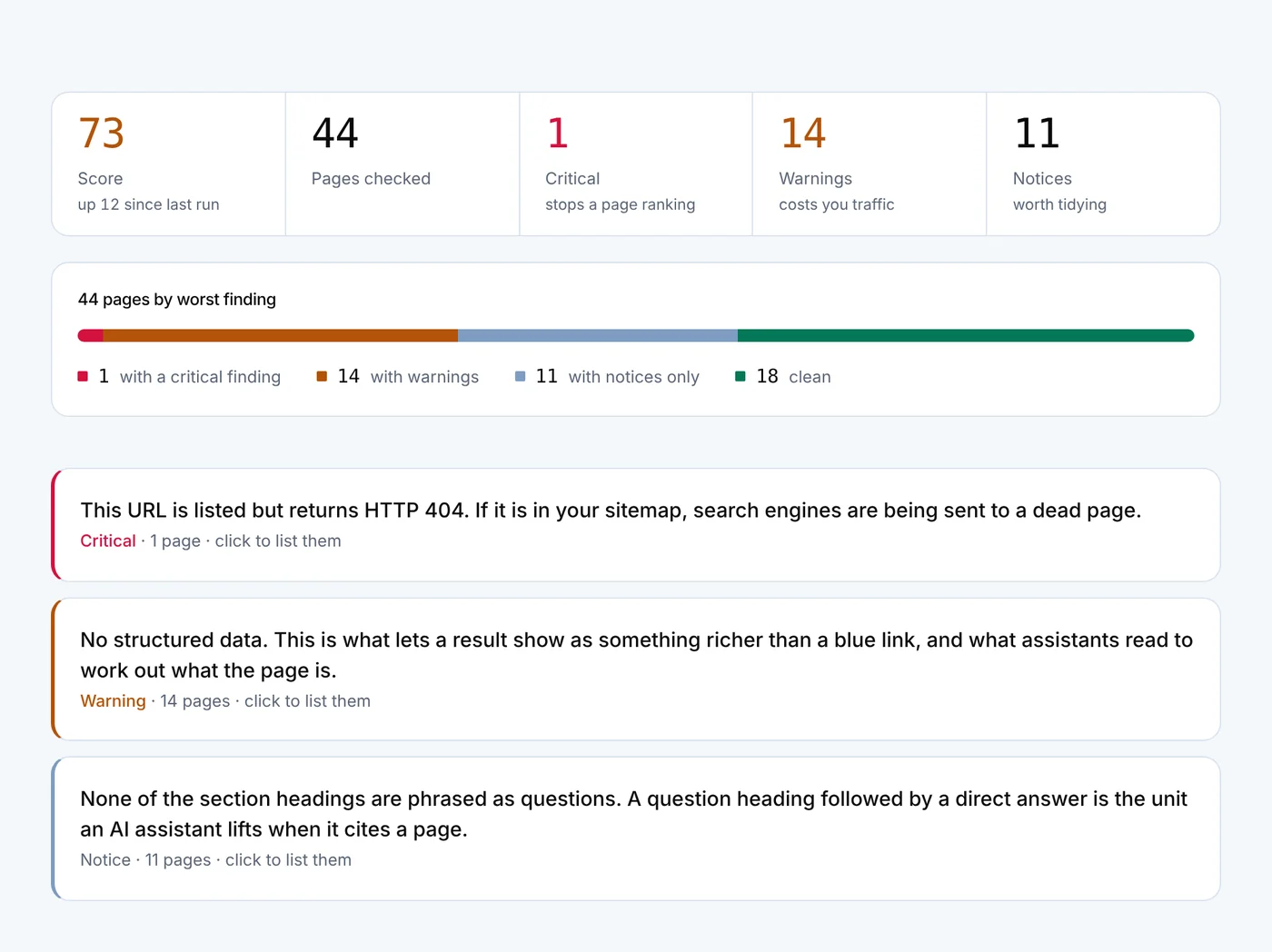
Run the free audit and see where your docs are outranking the pages meant to convert.
Start freeWhy comparison pages should not be generated unattended
A page comparing your product to a competitor can only be written from one of two sources. Either someone has used both and is describing what they found, or it has been assembled from the competitor's own marketing site. The second kind is worthless and obviously so: it repeats the competitor's positioning, it has no detail that could only come from use, and it goes out of date the moment they ship anything. Readers comparing software are the most sceptical readers you have, and they can tell.
It is also the page with the most to lose. A comparison with a wrong fact in it is a reason not to trust anything else you have written, and in some jurisdictions comparative advertising carries legal exposure on top of the credibility cost.
So the honest version of this: Visorank will draft the structure of a comparison, research what is publicly stated, and leave the judgements to you. Somebody at your company needs to have used the other product, and the page needs to say things that could only come from having used it. That is a day of work per competitor and it is the best-spent day in your whole content programme. Three comparison pages written properly will usually outperform fifty generated use-case pages, which is the opposite of what a tool selling volume would like to tell you.
The adjacent pages follow the same rule. An alternatives page listing the real options in your category, including the ones that beat you at something, is credible and gets linked to. The same page where every competitor has a vague weakness and you win every row convinces nobody.
Your documentation is probably competing with your marketing
Docs rank well. They are specific, heavily internally linked, frequently updated, and they answer the exact phrasing of technical queries. The trouble is that a reference page is a bad landing page for someone deciding whether to buy, so a docs page winning a commercial query converts at a fraction of what the marketing page would have.
The fix is structural rather than technical. Decide, per query, which page is supposed to own it. Where a docs page has taken a commercial query, the marketing page usually needs to be substantially better than it currently is, and the docs page needs to link to it prominently rather than being hidden from search. Removing docs from the index is almost always the wrong answer, because they are genuinely useful and they earn links.
The audit reports where two of your own pages are competing for the same thing, which is the information you need to make those calls. It will not make them for you, because which page should own a query depends on what you want that visitor to do.
What to actually do, in order
First, the comparison and alternative pages for the competitors you lose deals to, written by hand, by somebody who has used the products. Two or three pages. This is the highest-return content work available to a SaaS company and it is not automatable.
Second, integration pages for the tools your customers already run, where you have a real integration. These convert well, they are specific enough to rank without much authority, and they are honest work: the page describes a thing that exists.
Third, the use-case layer, at volume, which is where this product earns its place. The long tail of how-do-I questions in your category is larger than any team can write by hand, each page is individually low-value and collectively significant, and nothing about them requires the judgement the comparison pages require.
Fourth, the broad top-of-funnel content, if ever. It is the layer most SaaS companies start with and the one with the worst return, and it only makes sense once the first three are done and you are optimising for brand reach rather than signups.
What this will not do for a SaaS company
It will not write a credible comparison against a competitor it cannot use. It drafts the structure and researches what is public. The substance has to come from someone who has used the other product.
It will not decide whether your docs or your marketing site should own a query. It reports the collision; the call is a positioning decision.
It will not generate pipeline from top-of-funnel volume. If broad traffic is the goal, be clear that traffic and signups are different metrics and that the first does not reliably produce the second.
It will not get pages into Google fast. IndexNow covers Bing, Yandex, Seznam and Naver. Google is not a participant.
Automate the use-case layer, write the comparisons yourself, and stop confusing the two.
Start freeQuestions worth asking first
Do AI assistants cite SaaS content, and does it matter?
Increasingly yes, and for software it matters more than for most categories, because a meaningful share of software research now starts with a question in a chat window rather than a search box. What gets cited is specific, attributable and structured: a stated answer, concrete numbers, a question as a heading with a direct answer under it. Each article here is scored on exactly those properties before you publish it, which is a different thing from guessing.
Should we build a programmatic page set?
Only where the variable genuinely changes the page. Integration pages work, because each integration is a different thing that does or does not exist. Pages that differ only by an industry name or a city do not, and the generator stops after three consecutive near-duplicates rather than producing them.
How long before SaaS content shows up in signups?
Comparison and integration pages can convert within weeks of ranking, because the reader is already buying. The use-case layer runs on a three to six month horizon and shows up as assisted conversions rather than direct ones, which makes it hard to attribute and easy to cancel prematurely.
Can it write about a category we are creating?
Carefully, and probably not as the priority. If nobody is searching for your category name yet, content targeting it has no demand to capture. The work is to rank for the problem people search for now, in the words they currently use, and introduce your framing inside those pages.