A tool suggests. An agent finishes.
The difference is whether you still have work left when it is done. Most AI SEO products end at a suggestion, a score or a draft in a text box. The job was never the draft.
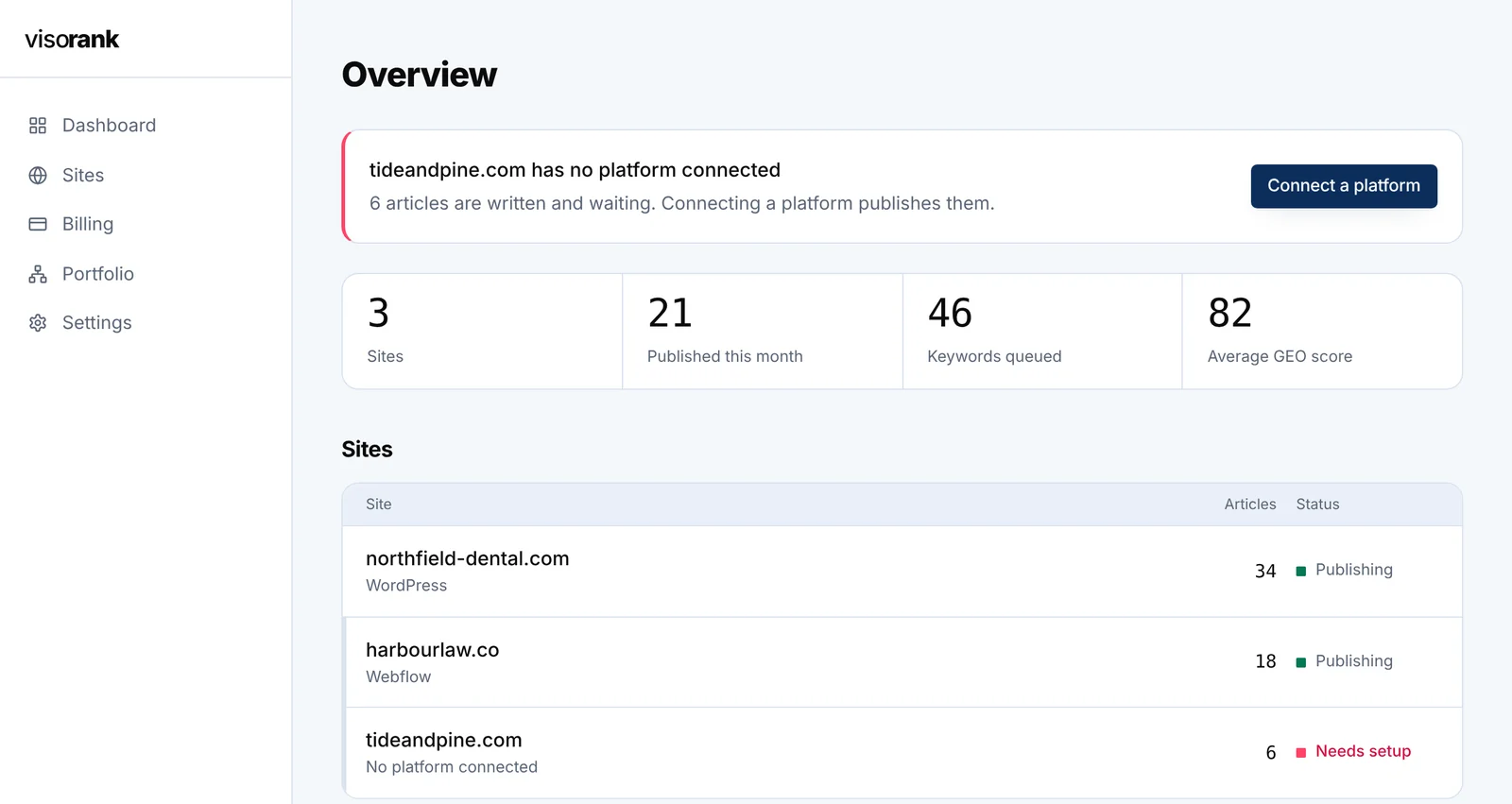
Where AI SEO tools usually stop
They generate text and stop. You still have to paste it into the CMS, pick a category, write the meta description, add the structured data, find older posts to link from, and remember to tell the search engines it exists.
That list is forty minutes a page. At one page a week it is survivable. At the volume that actually moves a site, it is the whole reason the publishing stops.
What runs unattended
Set a schedule and the sequence runs on its own. Every stage reports what it did, and anything it refuses to do says why in a sentence rather than an error code.
- It publishes into your CMS
- Under your account, in the right category, as a draft or live, with the post id recorded so a later edit updates that post instead of creating a second one.
- It refuses to publish broken work
- A draft that still contains an unfilled placeholder is held back rather than posted. That check exists because a page once went live with a bracketed placeholder in its title.
- It links new pages into old ones
- Using phrases already present in the older article, so the link reads as writing rather than as an insert.
- It notifies the search engines
- Bing, Yandex, Seznam and Naver, as soon as the page is live.
- It audits what is already there
- Crawls the site and reports what would stop a page ranking or being quoted: missing schema, thin pages, dead URLs in your sitemap, headings no assistant can lift an answer from.
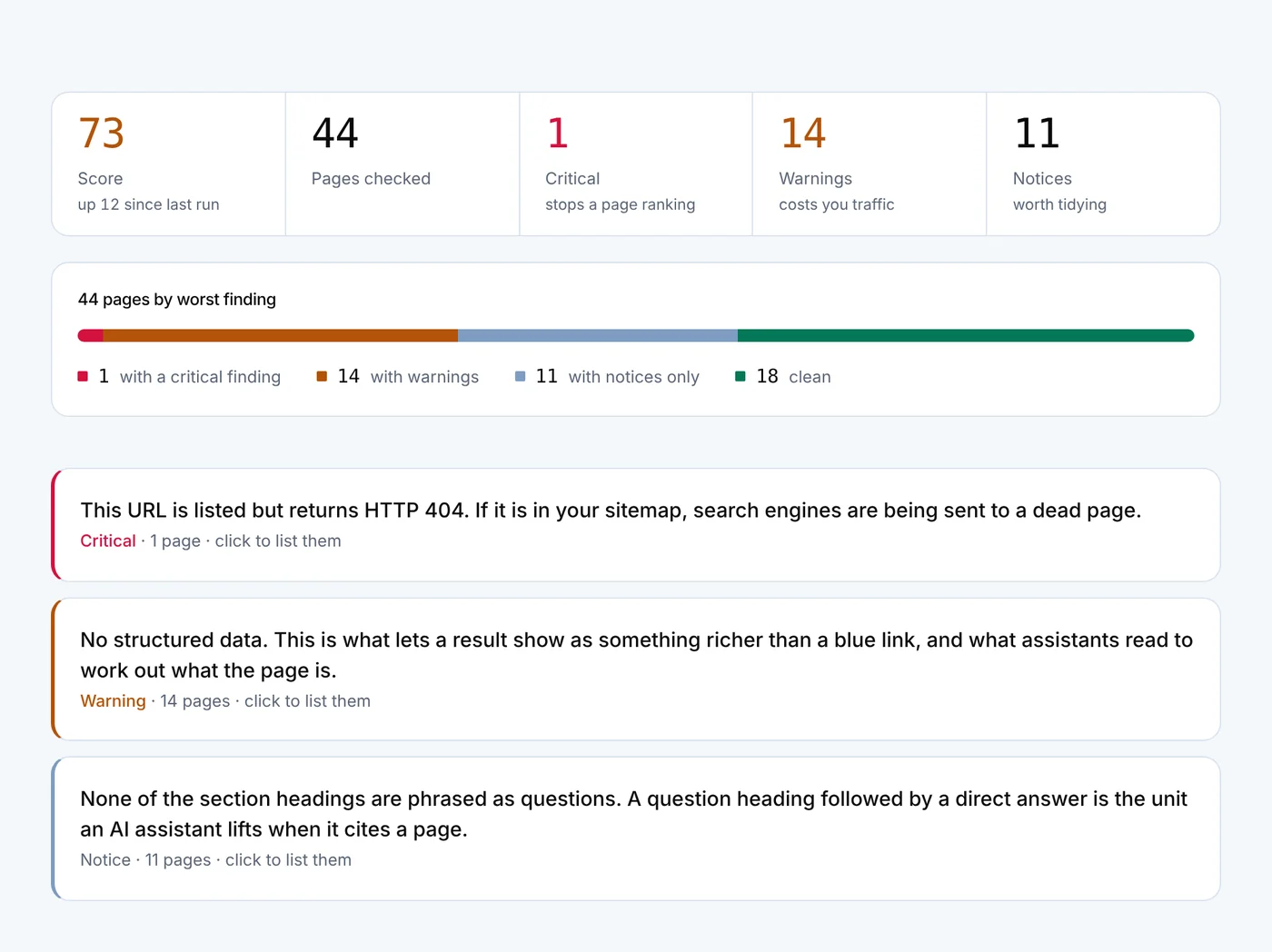
Set it once and the publishing stops depending on your week.
Start freeWhere it hands back to you
Nothing goes live without a connected platform and a plan that permits it, and you can keep every article landing as a draft indefinitely.
It will not invent a figure to fill a gap. If a claim needs a number and no source supports one, the sentence is written qualitatively instead.
Free to connect a site and see what it finds.
Start freeQuestions worth asking first
Can it publish without me approving each article?
Yes, if you set it to. The schedule has a publish mode: off, draft, or live. Draft is the default, because the first week is when you find out whether the voice is right.
What happens if my CMS token expires?
The publish step fails on its own and says so; the article it was carrying stays in your account and goes out when the connection is fixed. Generation and publishing are separate jobs so one failing does not discard the other.
Can I edit what it wrote?
Yes, in the dashboard, including articles already published. Every version is kept, so an edit or a rewrite can be put back. If the article is live, updating the post is one button.