You can tell four search engines in seconds. Google is not one of them.
Publishing a page and waiting to see whether anything noticed is the least satisfying part of SEO. Some of that wait is avoidable and some of it is not, and most tools are vague about which is which.
Why a new page sits there
A search engine finds a new URL by crawling something that links to it, or by being told. Crawling is on its own schedule, and on a small site that schedule can be days or weeks. A page that nothing links to may wait much longer.
The common advice is to submit it in Search Console by hand, which works and does not scale, or to buy an indexing service, most of which are reselling the same protocol described below while implying it reaches Google.
What actually happens when you publish
Two things are automatic, and the third is the one you control.
- IndexNow, within seconds
- A single notification reaches Bing, Yandex, Seznam and Naver as soon as a page is live. The key file is generated and verified for you, and retried for two weeks if your host is slow to serve it.
- A backlog, not just new pages
- Pages published before you connected can be submitted too, so an existing site is not left out of the one thing that is instant.
- Internal links, which is how crawlers arrive
- Every new article is linked from older ones using phrases already in them. A page with nothing pointing at it is a page a crawler has no route to.
- A sitemap that is actually correct
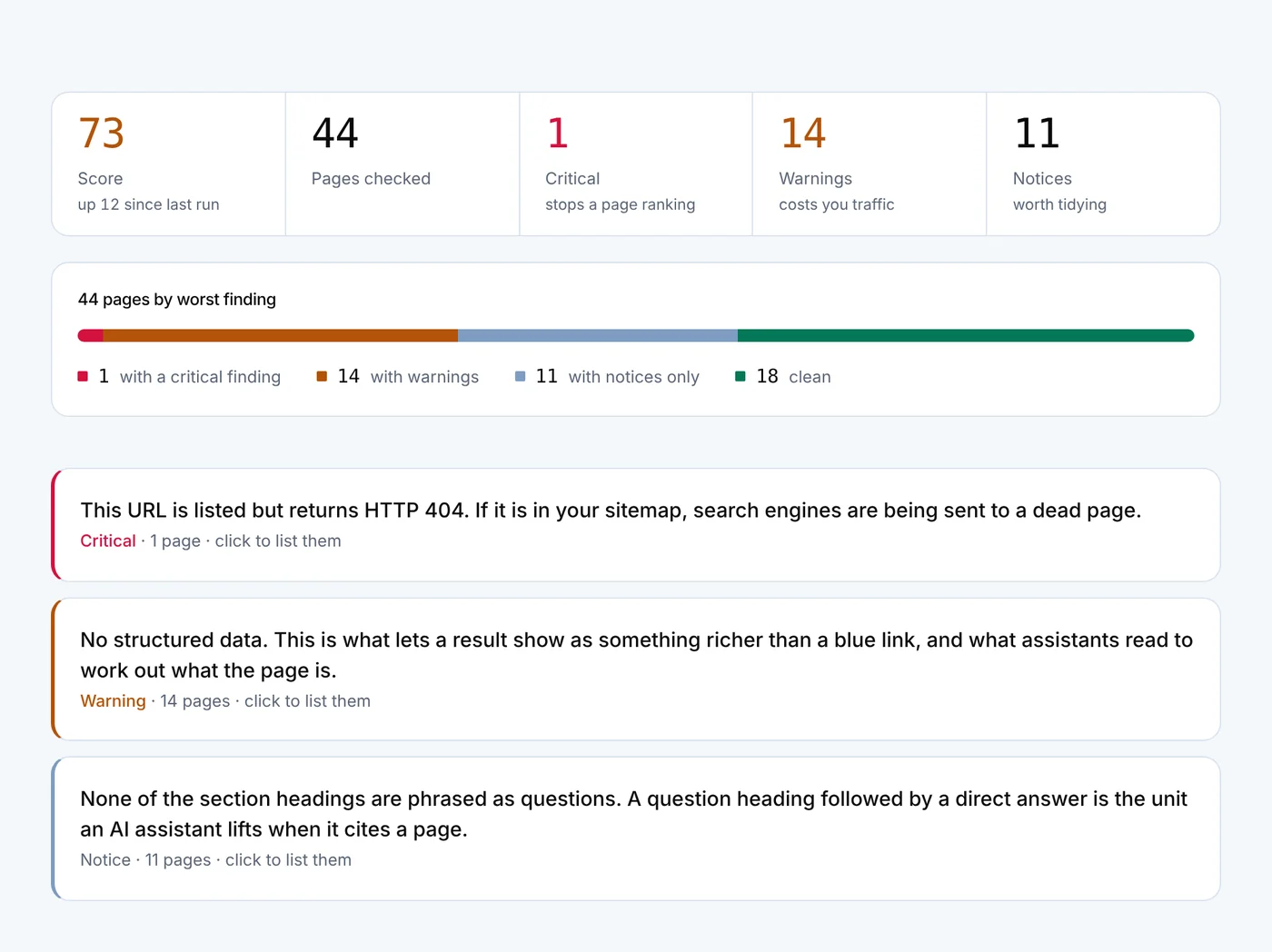
- The audit flags dead URLs sitting in your sitemap. Sending a crawler to a 404 spends the budget you were trying to save.
- Search Console, once it appears
- Clicks, impressions and position per article, so you can see when a page actually landed rather than guessing.
Set up once; every page after that is submitted automatically.
Start freeWhat nobody can speed up
Google does not participate in IndexNow. Its own Indexing API is documented for job postings and livestream pages only, and using it for ordinary articles is against its terms. Any product claiming to push your pages into Google is describing something that does not exist.
Being indexed is not being ranked. A page can appear in the index the same week and still take months to settle into a position, and nothing changes that.
A newly published article typically takes one to two weeks to show any Search Console data at all. That is normal rather than a sign something is broken.
Submit the pages you published before you got here, too.
Start freeQuestions worth asking first
Does IndexNow help with Google at all?
Not directly. Google has said it is evaluating the protocol but does not accept submissions. Google finds the page by crawling, which is why the internal linking matters more for Google than the notification does.
Is there any risk in submitting pages this way?
No. IndexNow is an open protocol those engines publish and encourage. The one requirement is a key file on your domain, which proves you own the URLs you are submitting.
Why does Bing index my pages faster than Google?
Partly the notification, partly that Bing crawls smaller sites more readily. It is a useful early signal: if Bing has a page and Google does not after a few weeks, the problem is usually that nothing on your site links to it.