Changing your headings to questions is an afternoon's work and it moves the needle
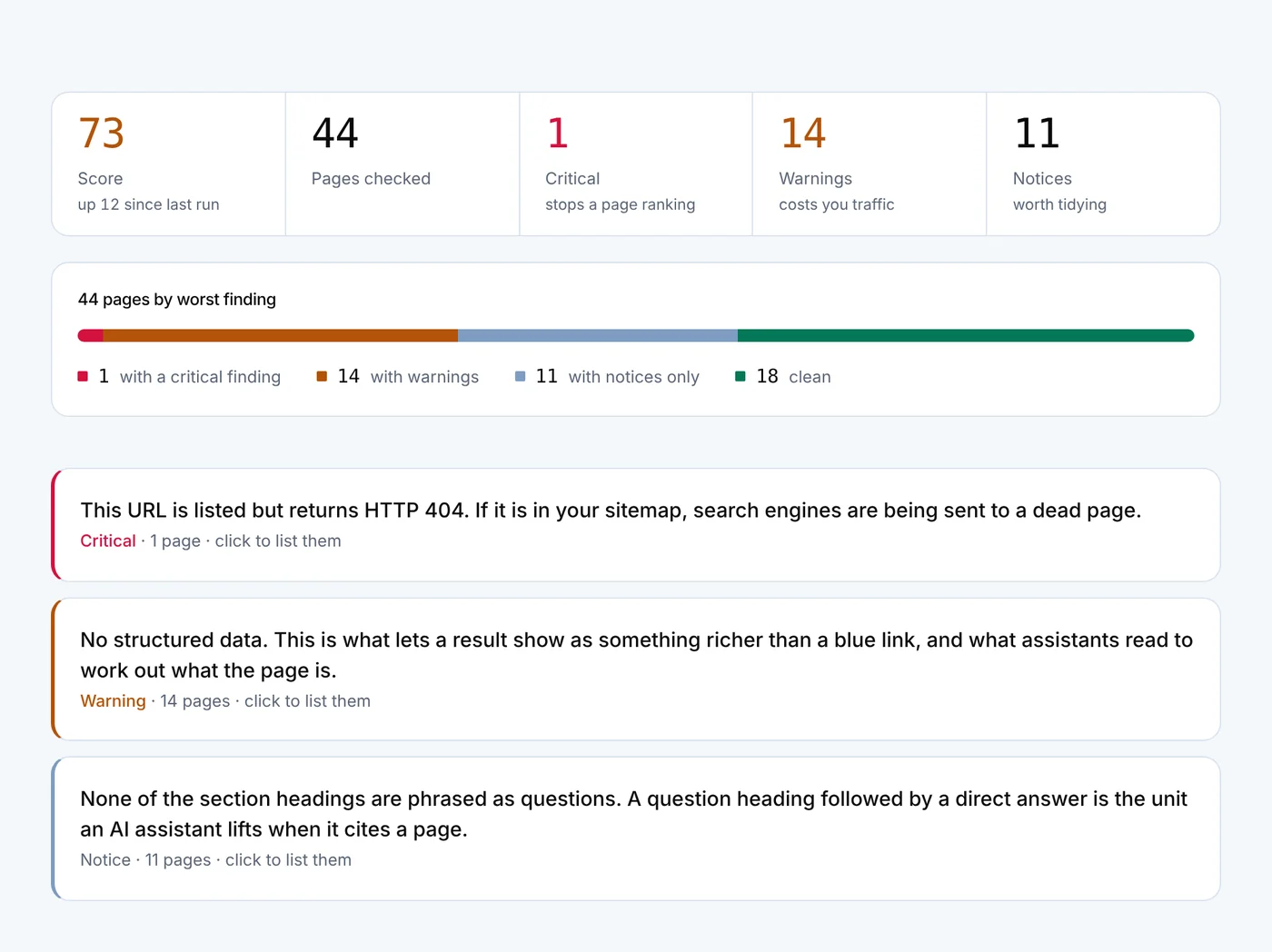
Of everything in answer engine optimisation this is the smallest change with the largest effect, and most sites have not made it. Our own audit of a client site found thirty-three pages with not one question-phrased heading on any of them. That is normal.
Why 'Pricing' loses to 'How much does it cost'
A heading has two audiences now. A reader scanning the page, who is served about equally by either version. And an assistant aligning someone's typed question against the structure of your document, which is served far better by one than the other.
People do not search for 'pricing'. They search for 'how much does X cost'. A heading that is literally that question is a direct match; a one-word label is something the system has to infer its way to. Inference is where you lose to a page that did not require any.
The second half of this is adjacency, and it is broken more often than the heading itself. A question heading followed by two paragraphs of context before the answer has separated the question from its answer, which undoes most of the benefit. The answer has to be the first thing underneath.
How to do it without wrecking the prose
The failure mode is a page that reads like an interrogation. Four rules keep it readable.
- Not every heading, just the ones with answers
- Sections that genuinely answer a question become questions. Narrative sections stay as they are. A page of nothing but questions reads badly and scores no better.
- Use the question people type
- Not a tidied-up version. 'Do I need an llms.txt file' beats 'On the necessity of llms.txt', and autocomplete will tell you the phrasing people use.
- Answer in the first sentence underneath
- Then elaborate. This is the half people skip and it carries as much of the effect as the heading does.
- Keep the answer self-contained
- It should make sense lifted out of the page. If it depends on the paragraph above, it cannot be quoted.
- Check it rather than assuming
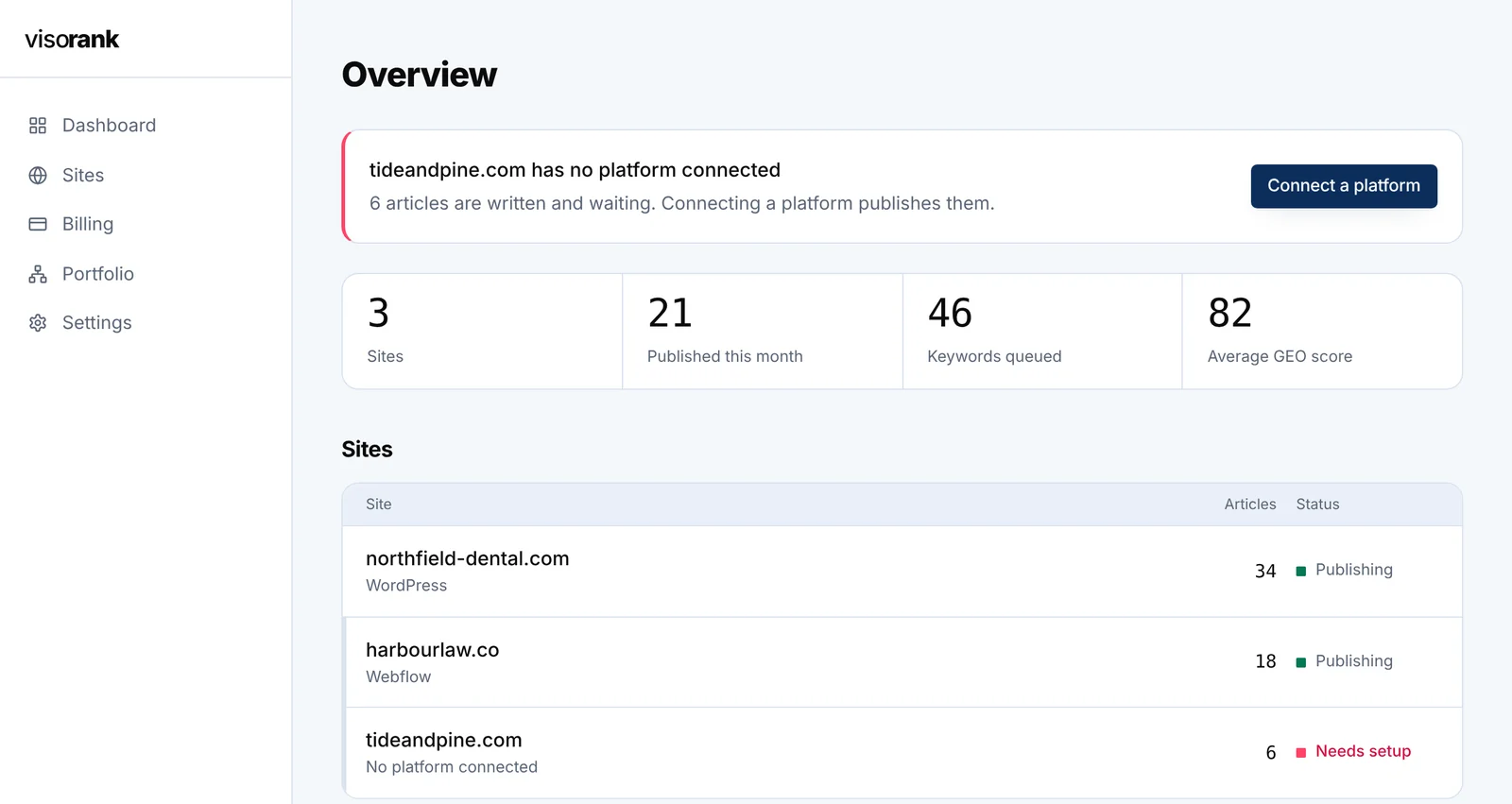
- The free GEO checker counts your headings, reports how many are questions, and tells you where an answer is not adjacent to its question.
Check a page free and see how many headings are questions.
Score a page freeThe four things the scorer measures, and why those four
An assistant answering a question does not read your page the way a person does. It is looking for a passage it can lift and attribute. Four properties decide whether your page contains such a passage, and all four are structural rather than stylistic, which is why they can be measured rather than judged.
A direct answer in the opening. If the first paragraph restates the question, sets context and promises an answer later, there is nothing to lift from it. The answer has to be in the first hundred words or so, stated plainly, before the caveats.
Headings phrased as questions. An assistant matching a user's question against your page matches most readily against a heading that is itself that question. Our own audit of langoli.com found thirty-three pages with not one question-phrased heading on them, which is typical rather than unusual.
Answers sitting directly under their questions. A question heading followed by two paragraphs of preamble breaks the pairing. The answer has to be the first thing under the heading, which is a formatting discipline more than a writing one.
Specific facts a reader could check. Numbers, dates, named entities, concrete claims. A page of general advice has nothing to quote; a page stating that the llms.txt v2 spec is dated 10 August 2026 does. This is the signal that filler content fails hardest: scoring a filler article on this dimension took its score from 74 to 45 once the measure was corrected.
The FAQ-schema question, which is not the same question
People conflate question headings with FAQ structured data and they are different things doing different jobs. Question headings change the prose and the document structure. FAQ schema is markup describing a list of question and answer pairs to a search engine.
Both are worth having and the prose matters more. Markup describing a page whose answers are buried in paragraph six is describing something that is not there. Markup on a page that genuinely pairs questions with adjacent answers is confirming something true, which is the only kind of markup worth adding.
Do the prose first. Then add the schema, for which there is a free generator here.
Where this does not apply
Pages that do not answer questions. A product page, a pricing table or a landing page has a different job and forcing questions onto it helps nothing.
It is not a ranking technique on its own. A badly researched page with excellent headings is still a badly researched page.
The scorer counts structural properties. It cannot tell you whether an answer is correct, which remains your job.
Nothing here is a promise of citation.
Every draft Visorank writes is scored on adjacency before it publishes.
Score a page freeQuestions worth asking first
How many of my headings should be questions?
There is no magic proportion and anyone quoting one invented it. The useful test is per section: does this section answer something a person would ask. If yes, make the heading that question. If no, leave it.
Will this make my writing worse?
It makes it more direct, which most business writing benefits from. The risk is mechanical repetition, which comes from converting every heading rather than the ones with answers under them.
Can I check an existing page without rewriting it?
Yes, that is what the free checker is for. Paste the URL, see how many headings are questions and where answers are not adjacent. Most pages need a handful of edits rather than a rewrite.